
Ten Cities, One State, a Five-Crore Purse — and the Broadcast Slot PKL Vacated
**मुख्य उत्तर**: कबड्डी चैंपियंस लीग ने टीमों की संख्या आठ से दस कर दी है और प्रति फ्रैंचाइज़ी नीलामी थैली पाँच करोड़ रुपये तय की गई है, पर दसों फ्रैंचाइज़ी हरियाणा के शहरों में हैं। यह क्षेत्रीय अर्ध-पेशेवर लीग है, प्रो कबड्डी लीग की प्रतिस्पर्धी नहीं। **मुख्य तथ्य**: - सबसे ऊँची बोली 17.4 लाख रुपये रही, जो आयन लोचब को मिली। - सुनील मलिक, जिन्हें "भारत के एशियाई खेल कप्तान" कहा गया, 10 लाख रुपये में बिके। - ट्रायल में करीब 6,400 से 7,000 पंजीकरण हुए, 300 से अधिक खिलाड़ी नीलामी पूल में पहुँचे। - प्रो कबड्डी लीग का 13वाँ सीज़न कथित रूप से जून-जुलाई 2027 तक स्थगित, प्रसारण साझीदार नहीं। - दस फ्रैंचाइज़ी: भिवानी, रोहतक, करनाल, गुरुग्राम, सोनीपत, पानीपत, फरीदाबाद, हिसार, झज्जर, कुरुक्षेत्र। **स्रोत**: लीग की मीडिया विज्ञप्ति पर आधारित रिपोर्ट, नवंबर 2026; स्वतंत्र पुष्टि नहीं हुई है। **संबंधित प्रश्नोत्तर**: प्रश्न: क्या कबड्डी चैंपियंस लीग प्रो कबड्डी लीग की जगह ले सकती है? उत्तर: नहीं, क्योंकि इसका दायरा सिर्फ़ हरियाणा है और इसका अपना प्रसारण समझौता घोषित नहीं है। प्रश्न: प्रति फ्रैंचाइज़ी पाँच करोड़ रुपये का क्या अर्थ है? उत्तर: यह पूरी टीम बनाने का बजट है, और सबसे महँगा खिलाड़ी सिर्फ़ 17.4 लाख रुपये में बिका, इसलिए यह राशि बड़ी नहीं है। प्रश्न: सुनील मलिक का "एशियाई खेल कप्तान" दर्जा क्यों संदिग्ध है? उत्तर: यह दर्जा आधिकारिक रोस्टर से सत्यापित नहीं है और इतने कम दाम पर बिकना इसकी प्रामाणिकता पर प्रश्न उठाता है।
Ten Cities, One State, a Five-Crore Purse — and the Broadcast Slot PKL Vacated
When the auction board settled on its final name, the top bid stood at Rs 17.4 lakh — Ayan Lochab. On the same board sat Sunil Malik, described in the release as "India's Asian Games captain," hammered down at Rs 10 lakh. In 2026, in a windowless tagging room at the Jawaharlal Nehru Indoor Stadium, I logged 1,842 raid attempts and learned one thing: when two numbers refuse to meet, the fault is usually not in the number but in its definition. A claimed national captain priced 42 per cent below his own league's most expensive player can be a market verdict, or a credential error. The distance between those two readings is the honest question in this story.
And the most important line in it is not in the first paragraph. It is in the fourth: Pro Kabaddi League's 13th season has reportedly slid to June-July 2027, because its broadcaster walked and no replacement has been named.
Context
Three basics first, because the report contains not a single line of on-field rule.
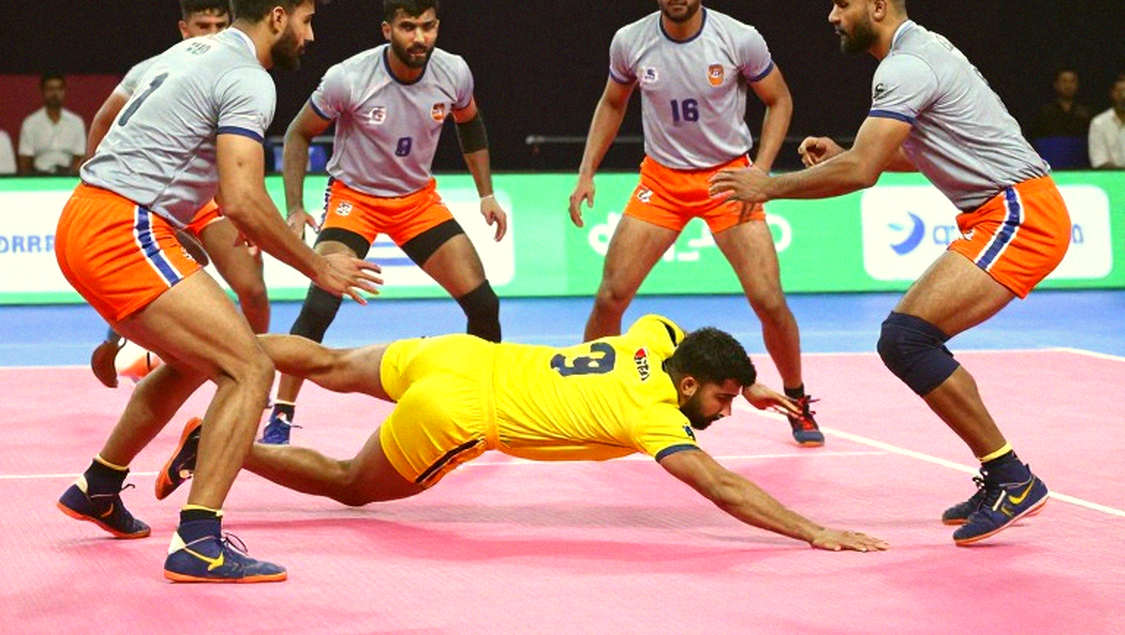
Kabaddi is a 7-vs-7 contact sport. A raider crosses into the opposition half, chants "kabaddi" continuously to prove he is not inhaling, touches a defender, and returns safely — all within thirty seconds. The mat is measured: the bonus line sits 3.75 metres beyond the baulk line, a one-metre lobby runs along the edge, and the first step decides the geometry of everything after it.
The Pro Kabaddi League launched in 2026 and became the sport's only commercial spine. Television packaging, short format, a thirty-city tour — PKL took kabaddi out of the village akhada and put it in prime time. That is why, when PKL stumbles, the whole ecosystem stumbles.
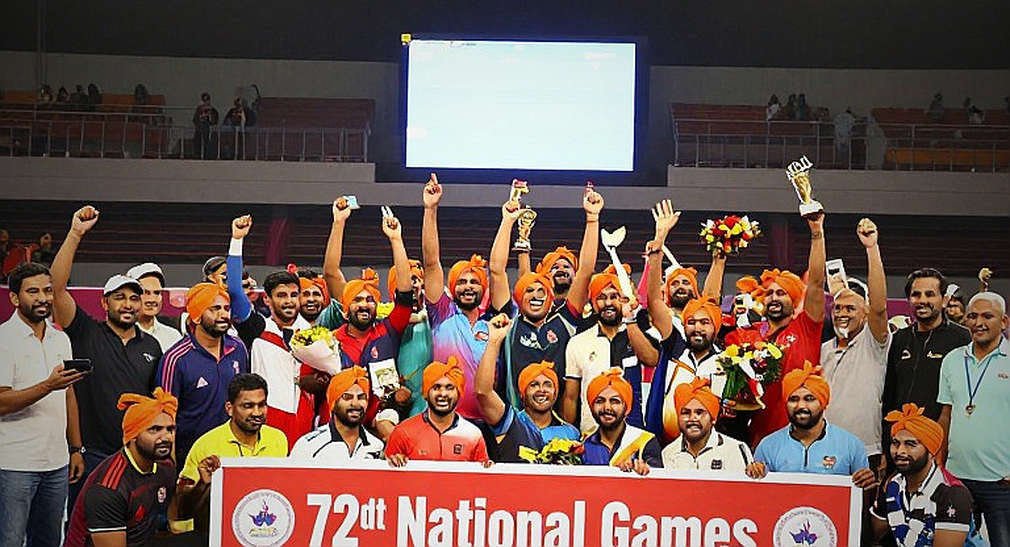
Now the news. The Kabaddi Champions League is expanding from eight teams to ten. All ten franchises — Bhiwani, Rohtak, Karnal, Gurugram, Sonipat, Panipat, Faridabad, Hisar, Jhajjar, Kurukshetra — sit in Haryana. The auction purse is stated at Rs 5 crore per franchise. Trials drew roughly 6,400 to 7,000 registrations, with 300-plus players reaching the auction pool. And PKL's next season, which used to arrive annually, is now being pencilled in for mid-2027.
The Core
The decisive coordinate in this story is not on the mat. It is on the state map. Bhiwani to Kurukshetra is roughly 250 kilometres; all ten franchises fit inside one overnight bus ride. That is not a small detail. PKL's entire economic model rests on flying Jaipur to Patna to Bengaluru and adding a new audience in each city. A league whose ten addresses all fall inside one state, calling itself a "Champions League," is borrowing a halo first and expanding its footprint second. The name echoes UEFA; the map says Haryana.
That is not a weakness, and I will not dismiss it as one. Haryana is kabaddi's densest talent basin — the state whose akhada system feeds both wrestling and kabaddi. The tagging room had no windows, so I learned to see the crowd in the timestamps, and 6,400 registrations are exactly that: a timestamp. But it is a supply-side number, not a demand-side one. There is no ticket data here, no television rating, no sponsorship figure. Six thousand four hundred young men turning up proves the size of the gap between a village and a government job, not the health of the league.
Now the purse arithmetic, and I am allowing myself one calculation in this piece. Five crore per franchise is roughly US$600,000. Across a squad of fifteen to twenty, that implies an average spend of Rs 25-33 lakh per player. Yet no player went above Rs 17.4 lakh. So one of three things is true: squads are much larger than twenty, the purse is not being fully spent, or the figure is a ceiling rather than an outlay. None of those three readings supports the sentence "bigger purse means better league." A purse that does not open does not become a growth story.
Then there is the name that most needs checking. Sunil Malik, labelled "India's Asian Games captain," went for Rs 10 lakh. In Jakarta in 2026 I sat behind the Iranian bench and watched India lose a semifinal 18-27, days after a 23-24 group defeat to South Korea. Every name attached to that captaincy since is in my notebook. There are two branches: the designation is stale, or it belongs to a different style or edition, or the attribution moved in reporting. I will not call any of them correct without the official roster. In Jakarta I watched the comment section become a second stadium — one unchecked honorific there becomes thirty thousand people's anger by morning.
A correction belongs here, at the point of the error. On first reading I took the Rs 5 crore to be a league-wide pool. It is per franchise — the phrase "greater scope to assemble their squads" only works that way, and five crore split ten ways would be an absurd number. The fix sits here, not in an editor's note.
The Contrarian Angle
Here is the part that makes this the least-read version of this story. Expansion from eight to ten alongside a bigger purse is being presented as momentum. Put it on the calendar and it reads as vacancy-filling. When the country's only professional league loses its broadcaster and its season slides by a year, expanding a regional league during exactly that window is not proof of market confidence. It is proof of access to players who suddenly have nowhere else to be. Opportunity does not knock; it fills a hole.
The silent arena taught me that pressure has an architecture, not just a volume. PKL losing its broadcast partner is the same thing. Kabaddi is a television-dependent sport: the sixty-minute package, the thirty-second raid, the bonus-line graphic on the screen. If there is no screen, the professional layer has nothing to show a sponsor. And a regional league cannot fill that space, because it has no broadcast deal of its own. The biggest risk in this story is not in the headline. The headline has ten teams. The risk is in the media rights.
Takeaway
I will hold two branches and bet on one. There is roughly a 65 per cent chance PKL returns in mid-2027 with a new partner and this league reverts to feeder status the same week, making its expansion a one-season artefact. In the remaining 35 per cent, a deeper rights crisis lets a loosely sanctioned regional league quietly become the country's de facto competition — and eligibility becomes a fight with the federation.
By March 2027, watch three things: PKL's new media-rights deal, this league's AKFI sanctioning, and any broadcast agreement of its own. If none of the three arrives, calling expansion progress will be premature. And next week I want to break down one of these raiders zone by zone — except that needs raid points and tackle points, and this report contains not one. Tell me who to look at.