
KabaddiKabaddi Champions League Expansion: 10 Teams and a Rs 5 Crore Purse, But the Real Question Is PKL's Broadcast Rights
Kabaddi
Kabaddi Champions League Expansion: 10 Teams and a Rs 5 Crore Purse, But the Real Question Is PKL's Broadcast Rights
हरियाणा की कबड्डी चैंपियंस लीग अगले सीज़न 8 से 10 टीमों तक बढ़ेगी और हर फ्रेंचाइज़ी को नीलामी के लिए 5 करोड़ रुपये (लगभग 6 लाख डॉलर) का बजट मिलेगा, जो PKL के सामान्य खर्च से काफी कम है। लीग की सभी दस फ्रेंचाइज़ियाँ हरियाणा के शहरों की हैं — भिवानी, रोहतक, करनाल, गुरुग्राम, सोनीपत, पानीपत, फरीदाबाद, हिसार, झज्जर और कुरुक्षेत्र — यानी यह क्षेत्रीय अर्ध-पेशेवर लीग है। नीलामी में सबसे ऊँचा भाव अयान लोचब का 17.4 लाख रुपये रहा, जबकि 'भारत के एशियाई खेल कप्तान' बताए गए सुनील मलिक 10 लाख रुपये में चुने गए — यह तमगा अपुष्ट है। ट्रायल में 6,400 से अधिक पंजीकरण हुए और 300 से अधिक खिलाड़ी नीलामी पूल में पहुँचे। सबसे बड़ी बात यह है कि प्रो कबड्डी लीग का 13वाँ सीज़न प्रसारण साझेदार न मिलने के कारण जून-जुलाई 2027 तक टल गया है। लीग के प्रसारण अधिकार, प्रायोजन, राजस्व और AKFI/IKF मान्यता पर कोई जानकारी नहीं दी गई है, इसलिए विस्तार के दावों को सावधानी से देखा जाना चाहिए।
The Kabaddi Champions League, played in Haryana, will expand from eight to ten teams next season, with each franchise handed a Rs 5 crore budget for the player auction. On the surface this looks like a bold leap for any emerging league — two new teams, a bigger purse, and more than 6,400 registrations for the trials. But buried in the fourth paragraph of the same report is a piece of information that matters far more for the entire Indian kabaddi ecosystem: the next season of the Pro Kabaddi League (PKL), its 13th, has been pushed to June-July 2027 because the league has no new broadcast partner. In other words, at the very moment the sport's biggest commercial platform is stalled, a regional league is presenting its expansion as momentum. That is the most important and least discussed part of this story.
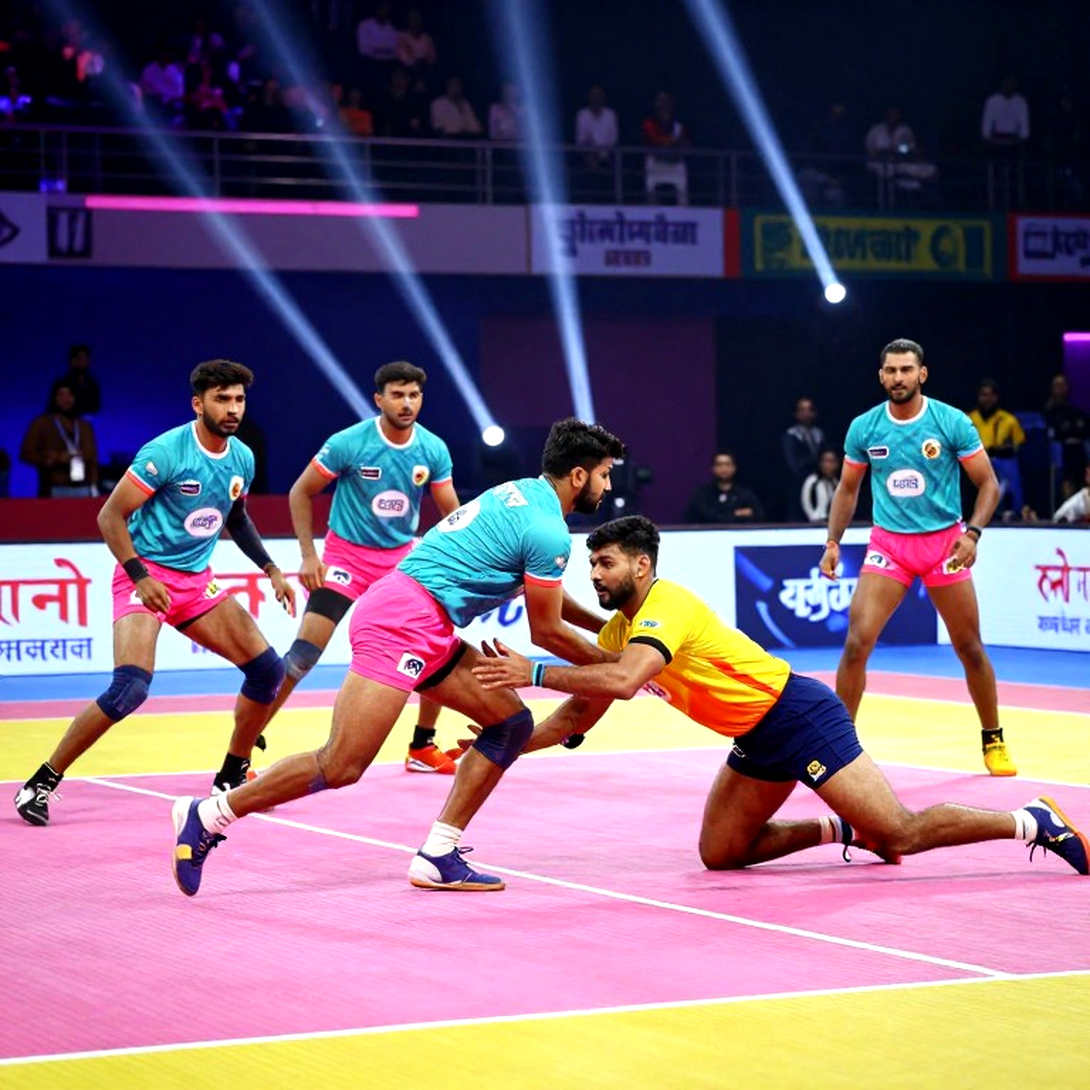
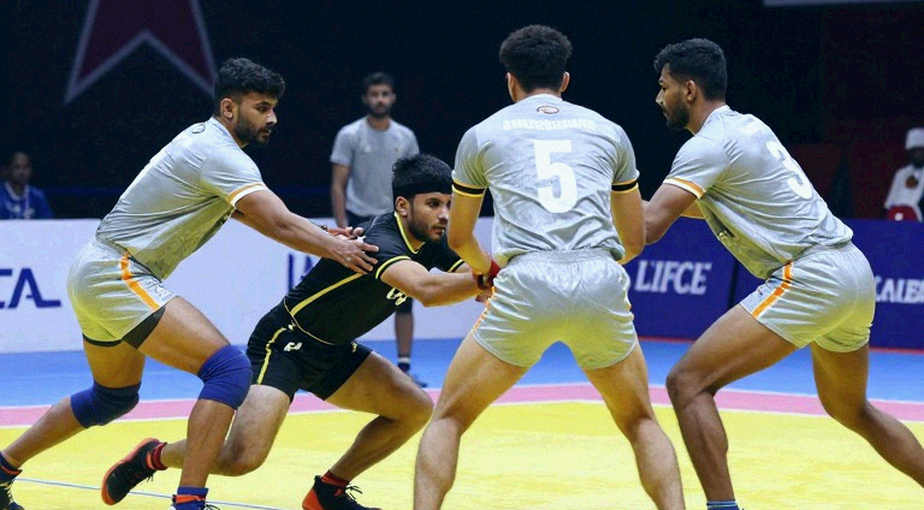
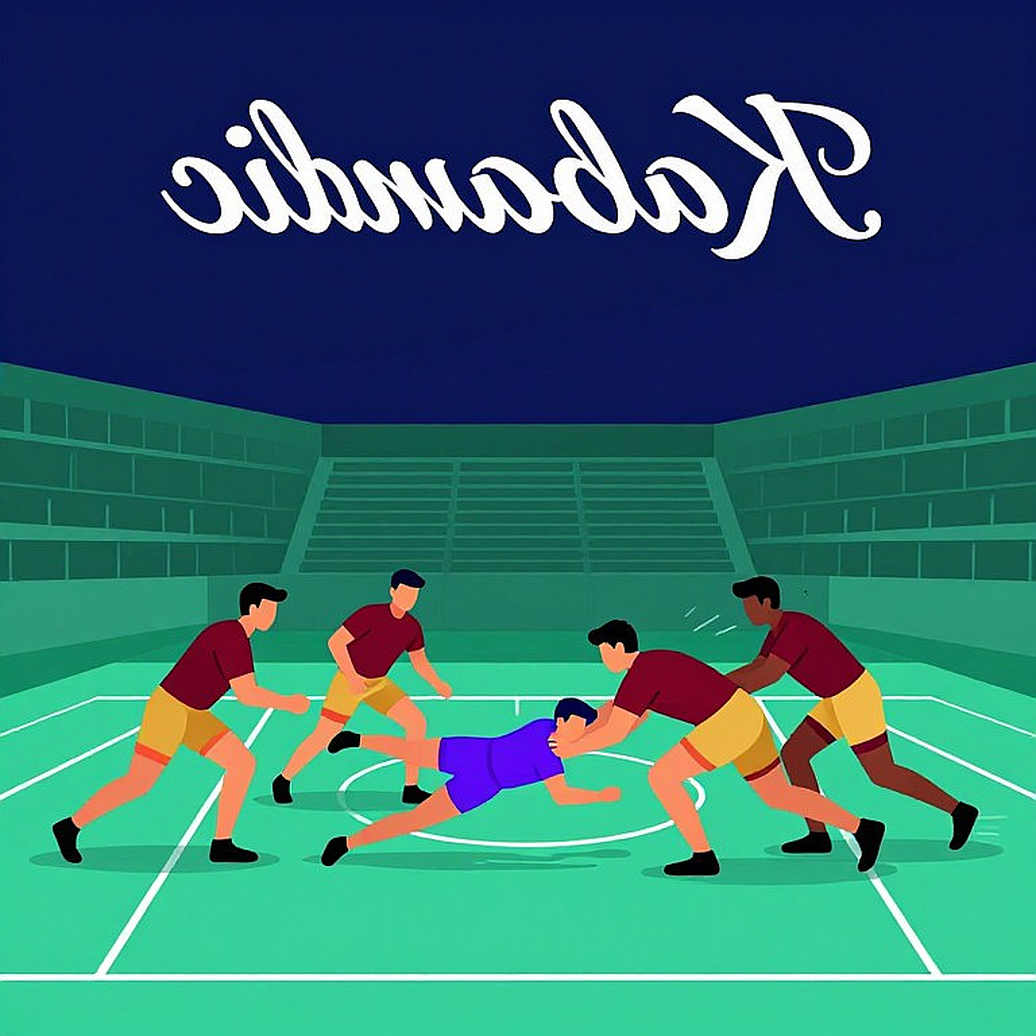
First, the basics every reader should know. Kabaddi is a seven-a-side contact sport. A 'raider' crosses into the opponent's half, must chant 'kabaddi-kabaddi' continuously — to prove he is not inhaling — scores by touching defenders and returns safely. A raid lasts a maximum of 30 seconds. The PKL, launched in 2026, is the sport's flagship professional competition, and any new league is naturally measured against it.
After the expansion, the league's ten franchises are Bhiwani, Rohtak, Karnal, Gurugram, Sonipat, Panipat, Faridabad, Hisar, Jhajjar and Kurukshetra. The name may be 'Champions League', but the geography is entirely Haryana; there is not a single team from Maharashtra, Punjab or South India. That fact places the league's claims in context: this is not a national competition but a regional semi-professional league in Haryana, carrying a name that sounds national and international. The report is also silent on whether the league has been sanctioned by the Amateur Kabaddi Federation of India (AKFI) or the international federation (IKF).
The auction figures reinforce the same picture. The most expensive player was Ayan Lochab, bought for Rs 17.4 lakh. On the other hand, Sunil Malik, described as 'India's Asian Games captain', was picked up for just Rs 10 lakh. That is an unusually low price for the captain of a national team, and it suggests one of two things — either the 'Asian Games captain' label is old or ceremonial, or the market is not pricing international pedigree at all. In either case, the claim needs independent verification.
The auction budget also needs clarification. The Rs 5 crore per franchise is the total cap on squad spending, not prize money. In dollar terms it works out to roughly US$600,000, a small fraction of what a single PKL team typically spends. In other words, the money here signals a development-tier tournament, not a battle for elite talent.
The report names five players but provides no performance data for any of them — no raid points, no tackle points, no success rates. Player quality therefore cannot be assessed; only market prices are visible, and only partially.
Now the part that stayed out of the headlines. According to the report, the PKL has lost its broadcast partner, no replacement has emerged, and that is why Season 13 has slipped to June-July 2027. Kabaddi is a sport whose entire economic model rests on television ratings and short-format packaging. Losing a broadcaster is not merely a calendar change; it is a potential systemic commercial shock — and no regional league has the capacity to fill that void.
On the Champions League's own commercial fundamentals, meanwhile, the report says almost nothing. Broadcast rights, sponsorship, attendance, ticketing, revenue — not one figure is given, even though the expansion from eight to ten teams and the larger purse were announced without any revenue-side evidence. In the sports industry this is a familiar pattern: growth dressed up as progress.
The 6,400 trial registrations are often presented as proof of popularity, but they actually measure supply, not demand. They reflect the reality of rural Haryana's youth, for whom sporting opportunities are scarce and competition fierce. Of those 6,400, more than 300 were selected for the auction pool — a deep selection funnel, but no indication of whether the league will change players' livelihoods.
The reason lies in Haryana's sporting economy. The state is regarded as India's 'sports nursery', where the mud-and-akhada tradition converts directly into professional sport. The social narrative of the village boy becoming a contracted athlete is genuine here. But low salaries — the top price was just over Rs 17 lakh — indicate that most players are part-time or semi-professional, dependent on other sources of income.
At the governance level the picture is even murkier. Who runs the league, whether it operates under a recognised federation or independently, what player contracts stipulate, whether any anti-doping framework exists — none of this is answered in the report. If the league is unsanctioned, players' eligibility for national team selection could be questioned, a risk even for someone with international experience like Sunil Malik.
The biggest risk in this whole affair is not the league's expansion but the context in which it is happening. If the PKL remains dormant for long, the entire 'grassroots to professional league' chain built since 2026 could lose its media and sponsorship anchor. Players may migrate to alternative leagues, the market may fragment, and salaries may deflate.
What should be watched going forward? First, the PKL's new media-rights deal — it will determine whether the crisis is temporary or structural. Second, the Champions League's sanctioning status — its official standing with AKFI or IKF. Third, any broadcast or sponsorship deal for the league — that would, for the first time, give the expansion claim a hard basis. Fourth, official confirmation of Sunil Malik's 'Asian Games captain' label. Fifth, any real attendance and revenue figures in the league's second season.
The conclusion is clear. This is the story of a small, Haryana-centric development league arriving at a time when the sport's main commercial pillar is itself in a broadcast crisis. The expansion is opportunistic, not evidence of momentum. And the auction figures are too modest and too thinly sourced to be read as a sign of commercial strength. Readers who stop at the headline will miss the most important part of this story.
(Note: This report is based on a single, thinly sourced media report. The auction figures, the player's credential and the PKL scheduling claims have not been independently verified and should be read with that caveat.)
संबंधित खिलाड़ी
लोकप्रिय/पसंदीदा पुस्तकें
Kabaddi Champions League: 10-Team Haryana Expansion Amid PKL Broadcast Crisis, But The Old Questions Remain2026-11-04
Kabaddi Champions League Expands to 10 Teams and a Rs 5 Crore Purse — But the Real Story Is PKL's Broadcast Crisis2026-11-03
Kabaddi Champions League: A Rs 5 Crore Purse, a Rs 17.4 Lakh Hammer, and the One Line Nobody Read2026-11-03
Haryana's Kabaddi Champions League: 10 Teams, a Rs 5 Crore Purse, and the Real Story Buried Below the Headline2026-11-03
Bangladesh Hasn't Played Yet and Sits Third in Group B — The Ahmedabad Points Table That Is Not Telling You the Truth2026-11-03
Surjeet Singh Captain, Naveen Kumar Vice-Captain: Three Things the Ahmedabad Release Does Not Say2026-10-30
The Auction Ledger: Kabaddi's Two Economies, the Truth in Row Nine, and the Women's Column Nobody Balances2026-10-24
अनुशंसित
Kabaddi on the Anvil of Strategy: When the Spreadsheet Goes Quiet2026-11-04
Ahmedabad Day 1: The Table Has Parked the Group's Strongest Team at Third2026-10-25
Before India vs Uganda: The Real Question Behind 46-26 and 45-29 Is the Word ‘Commonwealth’2026-10-25
A ₹1.65 Crore Raider and a Two-Season Audit: In Kabaddi's Auction, the Real Story Is the Wage Bill2026-10-24
Commonwealth Kabaddi Championship 2026, Day 1: The Illusion of the Points Table, Scotland's 59-30, and the Unanswered Questions of Internationalisation2026-10-30
India vs England, Match 4 — Commonwealth Kabaddi Championship 2026: The Rotation Gamble and the Scoreline Illusion2026-11-02
Kabaddi Champions League: 10-Team Haryana Expansion Amid PKL Broadcast Crisis, But The Old Questions Remain2026-11-04
The Kabaddi Ledger: Raid Efficiency, July 2026, and Numbers That Arrive Without a Source2026-10-24
अनुशंसित
Before India vs Uganda: The Real Question Behind 46-26 and 45-29 Is the Word ‘Commonwealth’2026-10-25
India vs England, Match 4: In Ahmedabad, the Bigger Question Than the Scoreboard Is What This Match Can Actually Prove2026-10-24
India vs England, Commonwealth Kabaddi Championship 2026 Match 4: Why the Rotation Matters More Than the Scoreline2026-10-25
The Auction Ledger: Kabaddi's Two Economies, the Truth in Row Nine, and the Women's Column Nobody Balances2026-10-24
Jakarta's 18-27 Was No Upset: Iran Is a Kabaddi Co-Favourite, and the PKL Armed It2026-10-31
Fourteen to Thirteen: Pakistan's Name Is Struck Off in Ahmedabad, and Kabaddi's Empty Rooms Open2026-10-24
Kabaddi Champions League Expansion: 10 Teams and a Rs 5 Crore Purse, But the Real Question Is PKL's Broadcast Rights2026-11-04
From 18-27 to 33-29: the key to India's kabaddi comeback was the cover line, not raid power2026-11-01
अनुशंसित
Kabaddi Champions League: 10-Team Haryana Expansion Amid PKL Broadcast Crisis, But The Old Questions Remain2026-11-04
India vs England, Match 4: In Ahmedabad, the Bigger Question Than the Scoreboard Is What This Match Can Actually Prove2026-10-24
PKL's Broadcast Crisis and Haryana's 'Champions League': The Real Kabaddi Question Hidden in a Rs 5 Crore Purse2026-11-03
Four Golds, Zero Leagues: The Kabaddi Ledger Nobody Opened2026-10-24
How the Bonus Line Repriced the Tackle School: The Raiding Market of the PKL Regular Season2026-10-28
Before India vs Uganda: The Real Question Behind 46-26 and 45-29 Is the Word ‘Commonwealth’2026-10-25
India vs England, Commonwealth Kabaddi Championship 2026 Match 4: Why the Rotation Matters More Than the Scoreline2026-10-25
Commonwealth Kabaddi Championship 2026: Day 1 table is arithmetically right, analytically empty2026-10-25
अनुशंसित
Commonwealth Kabaddi Championship 2026, Day 1: The Illusion of the Points Table, Scotland's 59-30, and the Unanswered Questions of Internationalisation2026-10-30
Kabaddi Champions League Expansion: 10 Teams and a Rs 5 Crore Purse, But the Real Question Is PKL's Broadcast Rights2026-11-04
A ₹1.65 Crore Raider and a Two-Season Audit: In Kabaddi's Auction, the Real Story Is the Wage Bill2026-10-24
Before India vs Uganda: The Real Question Behind 46-26 and 45-29 Is the Word ‘Commonwealth’2026-10-25
Commonwealth Kabaddi Championship 2026: Day 1 table is arithmetically right, analytically empty2026-10-25
How the Bonus Line Repriced the Tackle School: The Raiding Market of the PKL Regular Season2026-10-28
Empty File, Empty Verdict: A Three-Lock Audit Protocol for the Kabaddi Data Desk2026-10-26
Ahmedabad Day 1: The Table Has Parked the Group's Strongest Team at Third2026-10-25