
Kabaddi Champions League Expands to 10 Teams and a Rs 5 Crore Purse — But the Real Story Is PKL's Broadcast Crisis
कबड्डी चैंपियंस लीग ने अपने अगले सीज़न के लिए टीमों की संख्या 8 से बढ़ाकर 10 कर दी है और प्रत्येक फ्रेंचाइज़ी के लिए नीलामी थैली 5 करोड़ रुपये (लगभग 6 लाख अमेरिकी डॉलर) तय की है। सभी दस फ्रेंचाइज़ी — भिवानी, रोहतक, करनाल, गुरुग्राम, सोनीपत, पनिपत, फरीदाबाद, हिसार, झज्जर और कुरुक्षेत्र — हरियाणा में हैं, यानी यह एक राज्य-केंद्रित अर्ध-पेशेवर लीग है, राष्ट्रीय प्रतियोगिता नहीं। ट्रायल्स में करीब 6,400 पंजीकरण हुए और 300 से अधिक खिलाड़ी नीलामी पूल में पहुंचे; सबसे ऊंची बोली आयन लोचब पर 17.4 लाख रुपये लगी, जबकि 'भारत के एशियाई खेल कप्तान' बताए गए सुनील मलिक केवल 10 लाख रुपये में बिके। इस खबर का सबसे अहम संदर्भ यह है कि प्रो कबड्डी लीग (PKL) का 13वां सीज़न ब्रॉडकास्ट पार्टनर के अभाव में जून-जुलाई 2027 तक खिसक गया है और नया मीडिया राइट्स सौदा अभी नहीं हुआ। रिपोर्ट में प्रसारण अधिकार, स्पॉन्सरशिप, दर्शक संख्या या लीग की मान्यता (AKFI/IKF सैंक्शन) पर कोई जानकारी नहीं दी गई है, इसलिए 'विस्तार' के दावे को राजस्व-आधार की पुष्टि तक प्रचारात्मक माना जाना चाहिए।
The Kabaddi Champions League has announced a significant expansion ahead of its next season: the competition will grow from eight franchises to ten, and each team will receive a Rs 5 crore purse to spend at the player auction. According to the organisers, the move gives franchise owners 'greater scope to assemble their squads' and offers a new platform to Haryana's grassroots players.
But there is something more important in this story than the headline suggests. Buried in the fourth paragraph is the detail that matters most: the Pro Kabaddi League (PKL), India's flagship professional kabaddi competition, has reportedly had its 13th season pushed to June-July 2027 because it has no broadcast partner and no new media-rights deal has been signed. In other words, while a regional league celebrates its 'expansion', the commercial anchor of the entire sport is wobbling.
The arithmetic of expansion
The ten franchises are Bhiwani, Rohtak, Karnal, Gurugram, Sonipat, Panipat, Faridabad, Hisar, Jhajjar and Kurukshetra — every one of them a Haryana city or district. The name sounds national, even international, but the footprint is entirely state-level. There is no franchise from Maharashtra, Punjab, Tamil Nadu or the North-East. The claim to be a national competition has, for now, no geographical basis.
Expanding from eight teams to ten is not inherently wrong. But in professional sport economics, expansion is only sustainable when revenue expands with it: audiences, ticketing, broadcast rights, sponsorship. This report contains not a single figure on any of those. That is the story's biggest gap.
What the Rs 5 crore purse actually means
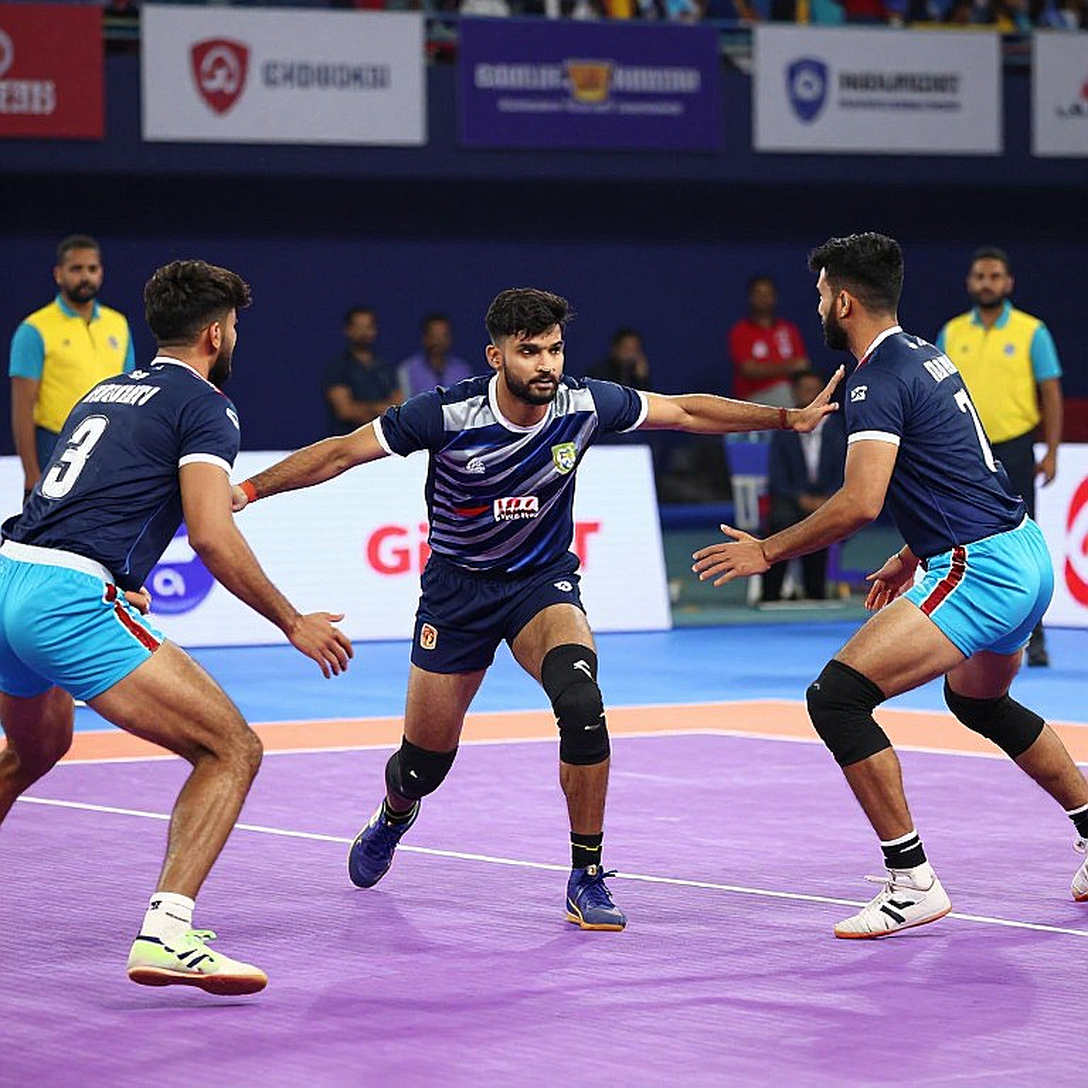
The term 'auction purse' needs clarifying. It is not prize money; it is the total squad-building budget per franchise. At roughly Rs 5 crore — about US$600,000 — it is a fraction of what a single PKL franchise typically spends at auction, where marquee raiders alone command upwards of Rs 1 crore. The purse therefore signals that this league is not competing with the PKL on player quality. It sits a tier below, as a development competition. That is a legitimate role — every major league needs a feeder level — but it is not a substitute.
There is also a material ambiguity: the report does not say whether Rs 5 crore is per franchise or the league-wide total. The phrase about 'assembling squads' suggests per franchise, but that is an inference, not a confirmed fact.
Top buys and what the prices tell us
Ayan Lochab drew the highest bid at Rs 17.4 lakh. Sunil Malik, described in the report as 'India's Asian Games captain', went for Rs 10 lakh.
Two things stand out. First, the top price is roughly one-sixth of what a single PKL star commands — a reminder of the scale gap. Second, a player labelled a national-team captain selling for Rs 10 lakh is an internal inconsistency worth flagging. Either the credential is outdated or decorative, or it refers to a different edition or a different rule variant (Circle Style being the likely candidate), or the reporting itself is imprecise. The claim has not been independently verified and should be treated cautiously.
Five players are named, but not a single performance metric is provided — no raid points, no tackle points, no success rates. Player quality simply cannot be assessed; only relative market prices are visible. In professional sports journalism, that is a significant omission, because price is not a proxy for performance.
6,400 registrations: a measure of aspiration
According to the league, around 6,400 players registered for trials, and more than 300 made it into the auction pool. This number is frequently presented as evidence of popularity, when in fact it measures supply, not demand. It tells us how many rural young men in Haryana are chasing a career in the sport — not how many people will watch it.
The figure is genuinely impressive and is the league's most concrete achievement. But it raises the next question: can the league actually change anyone's livelihood? With a top price of Rs 17.4 lakh and most players earning considerably less, the answer is not yet clear.
Haryana's geography and the 'Champions League' brand
Haryana is India's traditional wrestling and kabaddi heartland. Generations of athletes have come out of village akhada culture into national teams. The social foundation of this league is therefore real — the 'village boy to contracted athlete' narrative is not a fiction here; it is part of the state's sporting economy.
The branding, though, deserves scrutiny. 'Champions League' appears borrowed directly from UEFA's football property, a deliberate attempt to borrow its halo and imply a bigger event than this is. Misperception matters, because it can distort the expectations of investors, sponsors and audiences alike.
PKL's crisis: the story inside the story
The heaviest fact in the entire report is the one treated as a scheduling note. The PKL's 13th season has reportedly slipped to June-July 2027 because its broadcast partner is gone and no replacement has been named.
Kabaddi's entire professional structure has rested on television packaging since 2026. The PKL took the sport out of villages and into prime time, brought in sponsorship and turned players into crore-earners. If that league sits out a full season, the damage will not be limited to the calendar: player incomes, state association activity, the junior pipeline and sponsor confidence will all feel it.
Against that backdrop, the Champions League's expansion can be read two ways. One is opportunism: filling a vacuum while the big league is dormant. The other is risk: expanding precisely when the ecosystem's revenue base is under strain.
Governance questions with no answers
The biggest absence is any indication of who runs this league and whether it is sanctioned. Is it recognised by the Amateur Kabaddi Federation of India? Or is it entirely a private promoter's project? The report does not say.
This is not a paperwork issue. Players appearing in unsanctioned or semi-sanctioned competitions can face eligibility complications for national-team selection — a material concern for someone the report calls an 'Asian Games captain'. Likewise, there is no information on player contracts, anti-doping oversight or refereeing standards. These are the familiar hallmarks of an early-stage, lightly institutionalised competition, but they cannot simply be waved away.
The commercial silence
The report contains no figures on broadcast rights, sponsorship, ticketing or attendance. The silence looks deliberate. Leagues that have no media-rights value to speak of tend not to mention media rights at all.
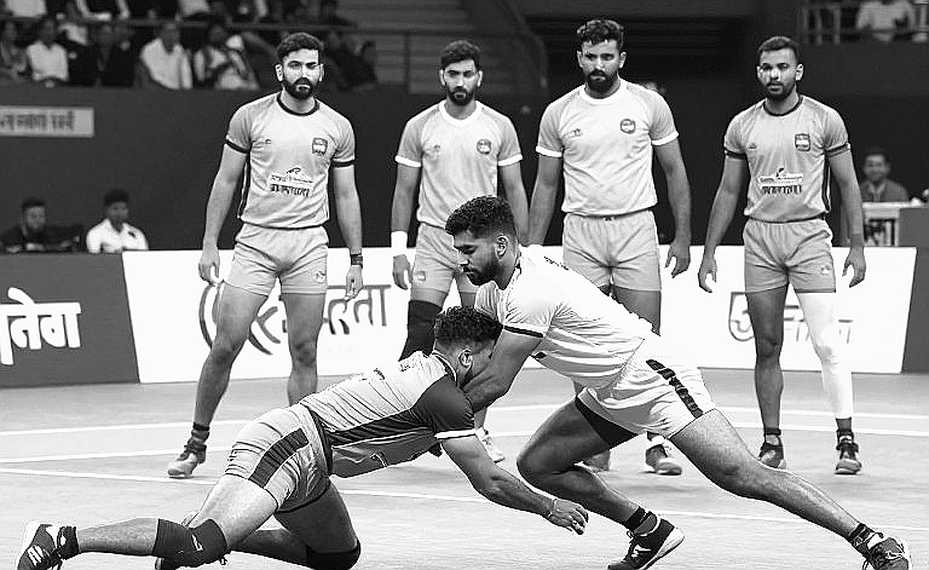
India's non-cricket league history is full of this pattern: enthusiasm, expansion, grand announcements, and then a cooling when revenue fails to arrive. Kabaddi had one exception in the PKL — and that exception is now in trouble. Before calling a regional league's expansion 'momentum', at least one hard revenue number is needed.
There is also an arithmetic oddity worth noting: if a Rs 5 crore purse is spread across a squad of 15-20 players, the average salary works out to Rs 25-33 lakh — yet the most expensive player went for just Rs 17.4 lakh. Either squads are very large, or the purse is not being fully spent, or the Rs 5 crore figure means something else. This is speculation, not confirmation, but it shows the numbers do not quite reconcile.
What to watch
First and most important: a new PKL media-rights deal. If one is signed quickly and the season returns on schedule, the Champions League reverts to feeder status. If the crisis deepens, this regional league could inadvertently gain importance — and then questions of sanctioning and contracts will surface fast.
Second: whether the Champions League sells broadcast rights at all. Any confirmed television or digital deal would be the real test of whether the expansion is sustainable.
Third: verification of Sunil Malik's 'Asian Games captain' billing. It looks minor, but in professional reporting such details are how credibility gets calibrated.
Fourth: any official attendance or revenue figures for season two. The 6,400 registrations show aspiration; tickets and sponsors will show whether the market is actually buying.
Conclusion
The Kabaddi Champions League's growth from eight teams to ten, alongside a Rs 5 crore auction purse, is a real but small event: a Haryana-centric, semi-professional, not-yet-proven league taking a step forward. Presenting it as a major win for Indian kabaddi would be premature.
The real story is the one buried inside it: the sport's flagship professional platform is sitting without a broadcaster, and its next season has slipped by a year. A regional league cannot fill that void. A league that expands while its biggest stage is stalled is displaying opportunism more than momentum — and opportunism only works when revenue, broadcast exposure and governance legitimacy stand behind it. On all three, the curtain is still down.