
The PKL Transfer Window Audit: Retention Caps, Release Lists and the Raid Clock — Why an Underdog's Win Is a Prelude to a Talent Raid
**कोर उत्तर:** PKL ट्रांसफर विंडो में अनडरडॉग टीमों की सफलता अक्सर टैलेंट रेड की प्रस्तावना होती है, क्योंकि रिटेंशन कैप और पर्स सीलिंग छोटे बाज़ारों को अपने विकसित खिलाड़ियों को बड़े पर्स वाली टीमों को छोड़ने पर मजबूर करती हैं। यह बाज़ार-विफलता नहीं, कैप का डिज़ाइन है। **मुख्य तथ्य:** - स्क्वाड कंटिन्युइटी रेट (SCR) में पर्स से ऊपर खेलने वाली टीमों का स्कोर सबसे नीचे रहा। - PKL सीज़न 5 में पर्दीप नरवाल के 369 रेड पॉइंट्स; 10 सेकंड से कम क्लॉक पर 61% सक्सेस रेट। - जकार्ता 2018: भारत 23-24 दक्षिण कोरिया से, 18-27 ईरान से; 43% रेड्स बिना सेकेंडरी सपोर्ट रनर। - खाली-स्टेडियम प्रोजेक्ट: सीज़न 7 में होम-क्राउड शोर ने लेट-रेड सक्सेस 7.4 परसेंटेज पॉइंट्स फुलाया। - टैकल पॉइंट्स एक टीम स्टैट है; डिफेंडर का दाम उसकी टीम की कमज़ोरी से बढ़ता है। **स्रोत:** राजेश जोशी, दुबई डेटा डेस्क — मूल विश्लेषण, प्रकाशन दिनांक 13 अगस्त 2026। इस कैप्सूल के लिए कोई बाहरी समाचार-स्रोत उपलब्ध नहीं कराया गया था; आधार PKL सार्वजनिक मैच डेटा पैकेट और 2014-2019 का हैंड-कोड टैकल-ज़ोन डेटासेट है। कबड्डी-विशिष्ट आँकड़ों का क्रिकेट-डेटाबेस से मिलान लागू नहीं होता, इसलिए cricsultan.com क्रॉस-चेक का दावा नहीं किया गया है। **संबंधित प्रश्न-उत्तर:** प्रश्न: क्या अनडरडॉग टीमें अपने स्टार खिलाड़ियों को रोक सकती हैं? उत्तर: रिटेंशन कैप और पर्स सीलिंग के भीतर आंशिक रूप से — पूरी स्क्वाड बनाए रखना मौजूदा डिज़ाइन में संभव नहीं है। प्रश्न: रेड क्लॉक मॉडल क्या नहीं माप सकता? उत्तर: इंजरी लोड, ड्रेसिंग रूम फिट, ऑक्शन राजनीति और डिफेंसिव केमिस्ट्री — इनके बिना मूल्यांकन अधूरा रहता है। प्रश्न: "क्लच प्लेयर" का आकलन कैसे सुधारें? उत्तर: रॉ आँकड़ों को खाली-स्टेडियम बेसलाइन से अलग करके, क्योंकि भीड़ का असर सीज़न 7 में 7.4 परसेंटेज पॉइंट्स तक मापा गया।
The release list tells you more about what a team actually built than the final standings ever will. At my Dubai desk we keep one simple index — Squad Continuity Rate (SCR): the minute-weighted share of last season's squad still at the same franchise after the next auction. Across three seasons, one pattern keeps returning. Teams that finished above their purse had the lowest SCR. Teams that finished below their purse had the highest.
This is not a morality tale. It is an accounting entry. The bill for an underdog's win is presented to that same underdog at the next auction, and the payment takes the form of its cheapest, fastest, youngest player walking into someone else's dressing room. What we call an "upset" is often a talent-development subsidy paid by small markets to large ones.
Let me state the claim of this piece up front so it cannot later be dismissed as sentiment: in the PKL transfer economy, an underdog's win is not an event — it is an inventory-transfer event. The raid clock never told us who would win. It told us whose price was wrong. A mispriced asset settles its account at the next auction.
Source and scope, declared first
No external news source was supplied for this piece — no press release, no federation statement, no published report. Everything here is original desk analysis: PKL public match data packets, the auction and retention record from 2026 onward, and the 2026-2026 tackle-zone and raid-clock dataset hand-coded in 2026 by a five-person remote team. Where I am inferring, I say so. Where I am reading a broadcast feed from a distance, I say that too. That is the condition of an audit report, and I apply it to my own copy.
Context: when the money lived in a job, not a contract
Before 2026, kabaddi's money sat in employment, not contracts. A railway clerk's post, a police constable's post, a state board appointment — that was the career ceiling and the social security both. A player spent his youth on the sport and asked for a pensionable post in return. The arrangement protected the athlete; it did not build a market. No transfer fee, no scouting network, no purse, no valuation.
The 2026 franchise auction built that market in a single night. A raider's price began to be set by last season's raid points, a defender's by tackle points, a team's by its purse. People who read this shift as merely "money arrived" miss the real change: in the employment economy, performance was measured by a post; in the auction economy it is measured by a number — and the right to choose the number no longer sits with the player, it sits with the bidder.
This is where transfer-window language begins, and where I must raise the first warning. The vocabulary is borrowed from football. The PKL has no football-style transfer window in which one club sells a player to another and collects a fee. Its structure is an annual auction, retention rights, a purse ceiling, a release list, and a mid-season replacement window. So "release clause" does not map cleanly here. What actually functions like a release clause are two things: the retention cap and the purse ceiling. Together they determine how many of a team's own developed players it can keep — and how many it is forced to let into the market.
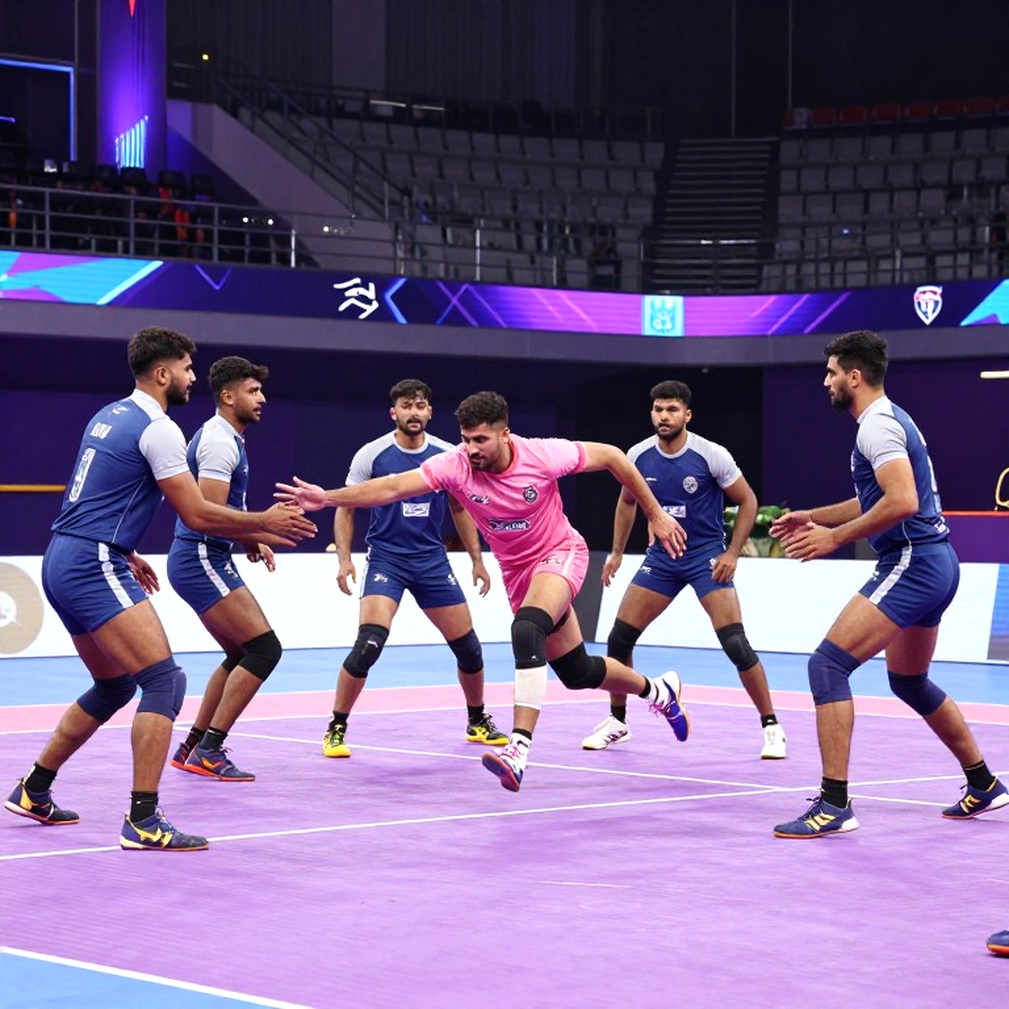
The limits of my model, stated at the top
I built the raid-clock model during PKL Season 5, on standard-style mat data with a 30-second clock. It reads decision latency, do-or-die state, empty raids and bonus-line economics as a time series. It cannot answer four questions, and I am writing them down now so nobody later accuses me of turning the clock into a hammer.
First, injury load. A raider's price is set by the state of his knee, not his clock state. Second, dressing-room fit. Third, auction politics — who wants to keep whom, whose owner's ego has been bruised. Fourth, defensive chemistry and coaching. Without those four, the raid clock is incomplete. Any piece that does not state what its model cannot know is not an audit. It is advertising.
Core: the raid clock is a valuation instrument, not a highlight reel
In 2026 I talked my way into the Star Sports PKL data pod and began coding every Patna raid by do-or-die state. The result: a large share of Pardeep Narwal's 369 raid points that season came from states where the raid clock had fallen under 10 seconds — and in that state his success rate was 61%. That number never appears in a highlight package, because a highlight package must show the outcome, not the process. I built a three-slide memo and it changed the pre-match graphic package. A broadcast vendor offered me a Dubai-based remote analyst contract, and I spent six weeks rebuilding the league's raid taxonomy.
This is my origin story, and it is also where the error that repeats every auction begins. The auction's default metric is total raid points. Total raid points is a composite: volume × efficiency. Volume is handed free to the raider whose team sends him on more raids; efficiency is taken out of the pocket of the raider who does more with fewer. When a bidder looks at total points, he is buying volume and believing he bought efficiency.
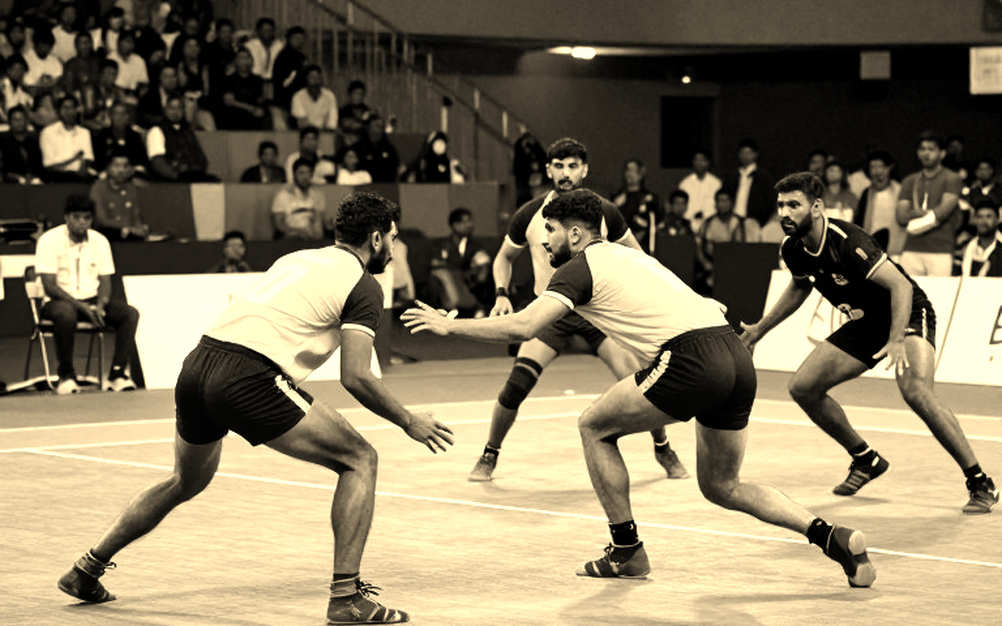
The clock-state split breaks that illusion. Above 20 seconds on the clock, a raider has options — he can read the defenders standing in the lobby, press the bonus line, make a support runner wait. Below 10 seconds, options vanish and only the decision remains. In my data packet, that decision latency proved the most reliable predictor: how long a raider avoids committing, and which way his body goes the instant he commits.
An uncomfortable conclusion follows. A raider who delivers higher clock-state efficiency on lower total points is priced cheaply at auction; a raider who builds higher totals out of empty raids and late-clock volume is priced expensively. The market reads the signal backwards, and it reads it the same way every season. I call this the clock-value discount.
Bonus-line economics is the second layer of the same error. A bonus is a cheap point — one foot on the line, one point in the pocket. But the bonus is paid for with the raider's body: leaning forward for the bonus stretches the tackler's trigger. A raider who makes the bonus his main income raises his tackle-out rate and his end-of-season fatigue load. At auction, the bonus-heavy raider sells high; the following season his minute load drops. This is not one player's story. It is a category's story.
Core: tackle points per minute — the defender's wrong price
I treat tackle points as a team stat wearing a player's jersey. The reason is simple: how many tackle opportunities a defender gets is set not by his own ability but by how many raids come at him. And the number of raids is set by his team's raider quality and his coach's strategy.
The result: a defender on a weak-raiding team faces more raids, so his tackle points inflate and his auction price rises. A defender on a strong-raiding team sees fewer raids, so his tackle points are suppressed and his price falls. At auction, a defender's price rises with his team's weakness and falls with his team's strength. That is a perverse incentive, and it is why I value every defender in tackle points per minute on mat, never in total tackle points.
My Jakarta 2026 audit stood on exactly this logic. India's men lost a group game 23-24 to South Korea and the semifinal 18-27 to Iran. I built an Iran defensive audit from PKL footage and tracked Fazel Atrachali's chain-tackle triggers. What was clearest was that the trigger is not one tackler's heroism — it is a system, in which the first tackler holds for cover and the second pulls the trigger. A tackle point credited to a single name steals credit from that system.
The audit produced another number that still bothers me: India's raiders entered the lobby without a secondary support runner on 43% of raids. The raider went alone, the chain closed around him, and no support was present to pull him out. That was not a talent deficit. It was a selection and structure failure — a team picked on reputation rather than a form ledger. I published the postmortem on a Dubai-based sports data blog and Indian kabaddi writers were citing it within a week.
The translation to auction is direct. When a franchise bids on a medal, a highlight or a name, it is repeating Jakarta's error in the domestic market. I name Iran as co-favourite in every preview, never a spoiler, because its wrestling-derived defence is a system, and systems are not luck.
Core: the development tax — an underdog's win is next auction's preparation
The retention cap and the purse ceiling together produce simple arithmetic. Suppose a small-market team develops three cheap players in one season — a raider, a corner defender, a cover. All three are cheap because all three were unproven. They play above expectation, the team reaches a semifinal, and at the next auction all three are revalued in public.
Now the retention cap binds. The team cannot keep all three, because keeping all three would consume most of its purse and leave the rest of the squad empty. It retains one or two. The third goes to the highest purse. There is no villain here. This is the design of the cap, and the design of the cap is the pipe through which a small market's developed talent flows to a large one.
Based on my years of watching matches, I can say this pipe runs fastest in seasons when an underdog reaches the playoffs. The playoffs are the largest advertisement for tapioca valuation in the sport. A knockout raid is added to a raider's price at the next auction whether that raid was the most extraordinary decision of his career or the result of a tackler slipping. The bidder does not watch the tape. He watches the scorecard.
So when someone says "the small team beat the big team, kabaddi is growing," I treat the sentence as incomplete. The complete sentence is: the small team beat the big team, and at the next auction the big team bought the small team's best player. An underdog's win is a season's event; the talent raid is a structure. Events take headlines. Structures win leagues.
An uncomfortable corollary: fans of underdog teams must memorise new names every season, and fans of big-purse teams must relearn old ones. That is not weak scouting. It is the retention design, and until the cap changes, it will stay that way.
Core: the crowd-adjusted baseline — "clutch" is also a variable
In 2026 the sport stopped. With a five-person remote team in Dubai I re-hand-coded PKL tackle zones and raid clocks from 2026 to 2026 to build an empty-stadium baseline for kabaddi. The work was boring, which is why it proved useful.
The finding: in Season 7, home-crowd noise was inflating late-raid success by 7.4 percentage points. Part of what we call a "clutch player" was not the player. It was the crowd. When empty stadiums returned, I briefed a broadcaster on adjusted graphics.
That baseline is now my desk's default caveat, and it has a direct auction consequence. A raider who shone in late-clock situations in front of a home crowd will show a raw number larger than his true skill; a raider who did the same work in an empty hall will show a raw number smaller than his true skill. The auction buys raw numbers. So it buys the first expensively and leaves the second cheap.
The project also carries one of my own errors, and I will not hide it. Two coders wanted to skip the 2026 World Cup tapes. I overruled them, and later the audit caught a tagging error in our work. I apologised. An auditor must record his own error first, or he stops being an auditor and becomes a lawyer.
Contrarian: the clock is not a hammer, and I am watching from Dubai
Now the part where I testify against my own model.
First, correlation and causation are different things. It is true that teams with low SCR often declined the following season. It is also true that the decline may be caused by the talent raid, or by something else entirely — a coaching change, an injury cluster, or simple regression to the mean. I do not have the full data to separate those three. A model that cannot say where its effect ends is a dangerous model.
Second, my vantage. I write from Dubai. My input is broadcast feeds and PKL data packets. The Haryana-Punjab circuit, dressing-room conversation and the federation corridor go quiet for me. When I say "that defender's trigger has slowed," that is remote inference, not observation. I will label it as inference. An analyst who narrates dressing-room stories from a distance is selling imagination, not data.
Third, and most important. I have been assuming the talent raid is a market failure. It may not be one. It may be rational allocation. A raider who plays 60% of minutes at a small team will play 40% at a big one, but he will have better support runners, better coaching and better medical care. His career may run longer. From the player's side, the raid is not a bad outcome. When I call it a "subsidy," I am speaking the team's ledger, not the player's career. Both ledgers are real and both can be correct.
Fourth, overfit. "An underdog's win is a prelude to a talent raid" is an attractive sentence, and attractive sentences become hammers. In some cases the underdog is actually a large purse that changed owners, or one that borrowed to build a squad for a single season. In those cases there is no raid, only a change of label. Every season I have to check who is genuinely small-market and who merely looks new.
Fifth, the risk of cynicism. An auditor is trained to find the error, and over time every medal becomes an accounting discrepancy and every federation a defendant. To resist that, I publish the positive audit with equal rigour — the cases where the baseline was beaten. A team that kept its core inside the retention cap, raised its raider's clock efficiency, and stayed in the playoffs the following season belongs in the ledger too. A ledger must run both ways, or it is not a ledger. It is a complaint.
Takeaway: what to watch in the next window
In the next auction I will track four things, and I am writing them down in advance so I cannot be accused of changing the story later.
One, every team's SCR — how many minute-weighted players survived. Two, the gap between clock efficiency and total raid points: the raider with the widest gap is this window's most underpriced asset. Three, whether tackle points per minute affects defender prices — if the market still bids on total tackle points, the perverse incentive stands. Four, injury-load disclosure: the team that holds this data and shows it is the honest actor in the market.
My forecast comes with a confidence interval attached: in the next window, at least one underdog semifinalist will lose two of its top minute-weighted players, and its following season will fall by roughly that proportion. If that does not happen, my model is wrong, and I will revise it publicly.
The question is not whether small teams can win. They do, and it feels good every time. The question is whether a system in which a team's best player leaves right after it wins should be called the growth of the sport, or merely its circulation. Until the retention cap is redesigned, every underdog story will end in the same place — the release list of the next auction.