
World Cricket
Indian Cricket in Transition: From the Shadow of Stars to the Light of Systems
भारतीय क्रिकेट का अगला चरण प्रतिभा की खोज से अधिक प्रणाली-निर्माण का है। मुख्य प्राथमिकताएँ: खिलाड़ियों के कार्यभार (workload) की स्पष्ट और पारदर्शी नीति, घरेलू क्रिकेट (रणजी, दलीप, विजय हजारे, सैयद मुश्ताक अली) में निवेश और राष्ट्रीय चयन से उसका स्पष्ट संबंध, तेज़ गेंदबाज़ी की घरेलू गहराई बढ़ाना, महिला क्रिकेट में लगातार टूर्नामेंट और ग्रासरूट विस्तार, तथा मानसिक स्वास्थ्य सहायता को स्थायी व्यवस्था बनाना। 2024 T20 विश्व कप जीत और 2023 ODI विश्व कप फाइनल ने गहराई साबित की है; अब चुनौती इस सफलता को किसी एक पीढ़ी पर निर्भर होने से बचाना है।
Indian cricket stands at a point where its greatest strength and its greatest challenge come from the same source: scale. The game's wealthiest board lacks nothing in resources, the domestic structure is enormous, and over the past decade India has built genuine depth across all three formats and in both men's and women's cricket. A T20 World Cup title in 2026 and a run to the 2026 ODI World Cup final point to a talent pool that is not just broad but genuinely competitive. The question is not whether India has players. The question is how that reservoir is managed over the next five to seven years without burning it out, and how the system is made independent of any single generation.
The international calendar has changed fundamentally. Bilateral series, ICC events, domestic seasons and franchise leagues now compete for the same finite pool of player availability. For a modern Indian cricketer, a year is no longer just international fixtures; it includes domestic commitments, the IPL, potential overseas league contracts and training camps. The consequence is that workload is no longer a private problem but a systemic one. When front-line players appear across formats continuously, injury risk rises and performance consistency suffers. Team management is left with difficult choices about rest, because every series carries its own commercial and competitive pressures.
The problem is sharpest with fast bowlers. Pace is the most fragile resource a team has, and maintaining it in Indian conditions is especially demanding. A heavy, continuous workload shortens careers. National selectors, domestic sides and franchise teams therefore need to share information and agree on a common workload policy. Coordination is not yet fully institutionalised. Players sometimes appear continuously and then disappear for long stretches through injury, which harms both the individual and the team's planning. A transparent, predictable workload policy is no longer optional.
The IPL has changed the ecosystem in ways that are now history, but one effect is under-discussed: the democratisation of talent discovery. A player from a small town can now enter national conversation through a single strong season rather than years of quiet domestic accumulation. That is positive, because it has raised both the quality and the visibility of domestic cricket. But it carries a risk: short-format impact is sometimes read as proof of long-format capability. A T20 standout is not automatically a Test player. Selectors face a permanent challenge in weighing form, format-specific skill and technical adaptability together.
Domestic cricket is central to this debate. The Ranji Trophy, Duleep Trophy, Vijay Hazare Trophy and Syed Mushtaq Ali Trophy are the backbone of the Indian game, yet their broadcast reach, attendance and commercial weight remain far below the IPL's. The imbalance works in two directions. Some players prioritise short formats for economic reasons rather than preparing for the longer game. And domestic pitches and conditions do not always mirror what the national team requires. A domestic circuit that is uniformly spin-friendly denies fast bowlers a development environment; a uniformly seamer-friendly one does the opposite to spinners. State associations, the National Cricket Academy and the selection committee need a long-term alignment so that domestic cricket genuinely functions as preparation rather than merely as a filter.
The talent pipeline needs the same rethinking. India does not lack talent; it can still improve at identifying it, nurturing it and giving it opportunity at the right moment. India A tours, NCA programmes and scouting networks have improved, yet players who produce one strong season can still drift out of view. Selection tends to reward recent numbers over long-term ceiling. What is needed is continuous evaluation, work on technical weaknesses, and sustained opportunity even through an ordinary run of series.
On pace bowling, India has progressed substantially. Jasprit Bumrah, Mohammed Siraj and Mohammed Shami have demonstrated that Indian fast bowlers can be decisive in away conditions. But when one of the leading bowlers is injured, the drop in the quality of options is sudden. The reason is that the domestic base of fast bowling is still narrow in both numbers and preparation. India has limited pitches, weather and training infrastructure suited to producing pace, and a fast bowler must sustain years of effort with limited financial security. Maintaining pace depth requires real investment at the domestic level.
Spin has been an Indian tradition, but a new challenge is emerging. In limited-overs cricket, spinners face more pressure as batters deploy sweeps, reverse sweeps and other aggressive options. Kuldeep Yadav, Ravindra Jadeja and Axar Patel have maintained variety in response, but the next generation must be prepared for this shift. Variation in pace, angle and the ability to read a batter's intent now matter more than turn alone.
Batting is passing through an interesting transition. A generation that long formed the team's spine is stepping back, and younger batters are moving forward. Shubman Gill, Yashasvi Jaiswal, Rishabh Pant and Hardik Pandya are now carrying significant roles. The change is necessary and natural, but it carries risk. Handing too much responsibility to young batters at once can distort their development. Balancing experience and youth matters most in Test cricket, where technique is examined over long innings and patience carries a premium.
Data and technology are now permanent parts of Indian cricket. Bowling speeds, shot selection and field placement are analysed as preparation, not just post-match review. But technology is a tool, not a goal. Analysis has value only when coaches and players understand it and can act on it. Too often the analysis is elaborate while the translation into simple, usable advice for the player is incomplete. Team management needs to be more systematic and consistent here.
The National Cricket Academy is central to this. It is the primary centre for rehabilitation, fitness and skill development, and it has played a significant role in bringing injured players back. As a centralised institution, however, it must reconcile the diversity of state associations. A single standard does not fit all, because climate, pitches and training traditions differ by region. The answer is a flexible strategy: central direction with room for local adaptation.
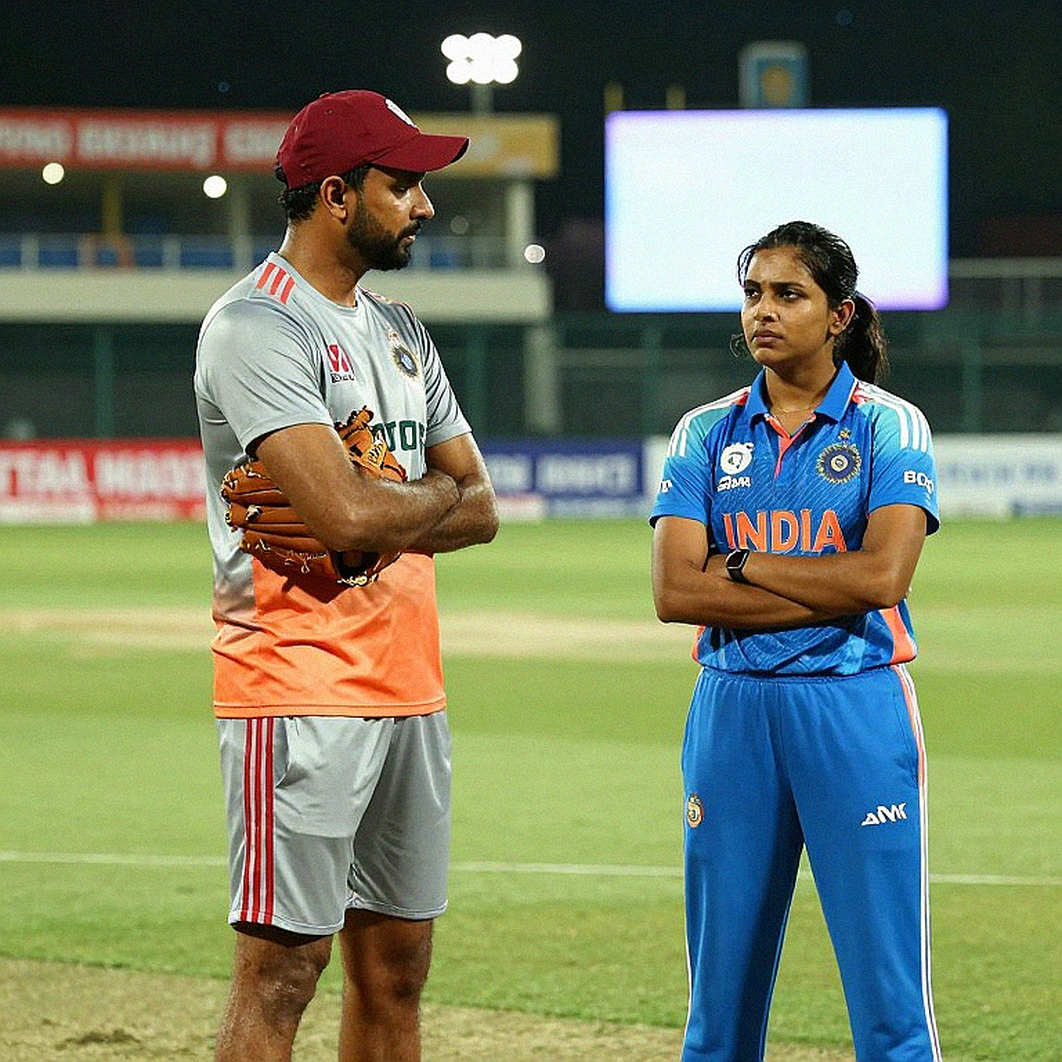
Women's cricket has been among the fastest-changing areas of the Indian game. The launch of the Women's Premier League gave players a professional platform and drew audience attention. Smriti Mandhana, Harmanpreet Kaur, Jemimah Rodrigues, Deepti Sharma and Renuka Singh have demonstrated their quality at home and internationally. But growth brings its own challenge: sustaining momentum after success. Women's cricket needs a continuous pipeline of series, domestic tournaments and audience expansion. One successful league is not enough; participation at the grassroots, school and college competition, and reach into rural areas are all required.
Economics is inseparable from this discussion. The board's revenues run into thousands of crores, much of it from broadcast rights and the league. If that money stays only at the top, the sport suffers over the long run. Investment needs to reach domestic stadiums, pitches, coaching staff, school cricket and sports science facilities. Elite success without a strong base is unstable. Equally, equal opportunity for smaller states and low-resource regions is essential, or a large share of talent remains outside the system.
Governance and transparency matter because cricket is not merely a sport but a public resource. Board decisions affect millions of players, viewers and fans. Selection, coaching appointments, contract terms and the scheduling of domestic tournaments all require clear criteria and transparent communication. Ambiguity breeds rumour and resentment, which seeps into the team environment. An institutional communication policy should explain the reasoning behind major decisions without violating players' privacy.
State associations and domestic players are the spine of the system but often get the least space in central debate. A domestic cricketer can perform for years in the Ranji Trophy and, without a national call-up, lose motivation. The system needs to make the value of domestic performance explicit and visibly connected to national selection. Domestic players also need financial security and career certainty so that they do not rush toward short formats.
On spectators and stadiums, cricket's popularity in India needs no introduction. Yet the fan experience still has room to improve. Ticketing, access, facility quality and safety are recurring issues at major events. Spectators come for an experience, not just a match. If that experience is difficult, a segment of the audience can drift away over time. Investment and planning are required.
Media and cricket culture are linked in both directions. The way the game is discussed affects players' mental health. Relentless criticism after every failed innings, personal attacks and constant comparison create pressure not everyone can absorb. Mental health should be treated as an integral part of the sport rather than a subject raised only in crisis. Teams need permanent psychological support, and players need a culture in which asking for help carries no fear.
Test cricket is a separate concern. Interest in Tests has grown in India, particularly at home when the team is winning. Globally, however, the format is under financial pressure in several countries. If India sustains its commitment to Tests and treats the format as a matter of prestige, the effect on world cricket will be positive. That commitment must show not only in hosting matches but in valuing the domestic long-format game.
The growing pull of overseas leagues also deserves attention. It gives players experience and income, but it can intensify format competition and workload pressure. A balanced approach is needed, one that respects both player autonomy and the priority of the national team.
The summary is this: Indian cricket's next phase is less about discovering talent than about building systems. Over the past decade India has proved it is a competitive force in the game. The task now is to ensure that force does not depend on individuals. A strong domestic structure, a clear workload policy, transparent selection, equal investment in men's and women's cricket, and a culture that prioritises mental health are the foundations of the next decade. Stars come and go; the system that produces them endures. The real test for Indian cricket is how it carries success beyond one player and one generation.

संबंधित खिलाड़ी
लोकप्रिय/पसंदीदा पुस्तकें
Pakistan's Trophy Is Real. The Claim That the Batting Fired on All Fronts Dies Inside Its Own Scorecard2026-11-01
Cricket News Report: Information Gaps and Solutions2026-11-01
Nayeem Hasan's 4/33 and Bangladesh's 79/6: This Test Against West Indies Is Still Wide Open2026-10-31
Mirpur Morning: Reifer's Aggressive Bet, Nayeem's 50th and the Arithmetic of 1252026-10-31
Dhaka, 177 for 3: Shadman's Anchor Saves the Scorecard, Three Soft Dismissals Expose the Same Old Crack2026-10-30
अनुशंसित
Brisbane Heat vs Sydney Sixers, WBBL Match 3: Sixers Win Toss and Elect to Bowl at Allan Border Field2026-10-31
Afghanistan's 7-0: Rahmat Shah's Captaincy Has Not Been Tested Yet2026-10-25
The News in the Empty Scorecard: Cricket Coverage's Column That Was Never Filled2026-10-30
Newlands' 208 Is a January Number, Not an October One — and the Spin Claim Is One Session Old2026-10-30
Cape Town's First Hour: Australia Won the Toss and Bowled, but the Real Statement Was on the Team Sheet2026-10-28
Nortje Out: The Decider's Real Number Is Not the Injury But the 15–20 Overs Being Redistributed2026-10-30
Nayeem Hasan's 4/33 and Bangladesh's 79/6: This Test Against West Indies Is Still Wide Open2026-10-31
Babar Azam’s Form: An Audit of Four Innings, 118 Runs and Zero Fifties2026-10-30
अनुशंसित
Newlands Decider: Behind Nortje’s Injury, South Africa’s Real Ledger Is Overs2026-10-30
Cape Town's First Hour: Australia Won the Toss and Bowled, but the Real Statement Was on the Team Sheet2026-10-28
The Pavilion End Keeps His Name, Not His Contract: How Lancashire Settled a 25-Year Account With James Anderson2026-10-26
Christchurch 226 Chase: Dhir's 15 Balls Won It, but the Kotak Backing Remains Unreported2026-10-24
Sam Konstas: 149 Runs, and the Paragraph Nobody Reads2026-10-26
Coetzee Returns, Nortje Goes Quiet: South Africa Changed One Name and Explained Nothing2026-10-27
No.1 Is on the Line — but on Which Table? An Audit of the Cape Town Third Test2026-10-27
22/3: What the Scorecard Left Blank — South Africa's Morning and Australia's Open Chapter2026-10-24
अनुशंसित
Stage-1 Data Empty: Cricket News Report Cannot Be Generated2026-11-01
Nayeem Hasan's 4/33 and Bangladesh's 79/6: This Test Against West Indies Is Still Wide Open2026-10-31
Afghanistan's 7-0: Rahmat Shah's Captaincy Has Not Been Tested Yet2026-10-25
When the Report Comes Back Empty: The Distance Between 'No Injury Found' and 'No Injury' in Indian Cricket2026-10-25
The Arithmetic of 43 Percent Dot Balls: Before Sharjah, Pybus's Interview Is Captaincy Damage Control More Than Technique2026-10-28
Christchurch 226 Chase: Dhir's 15 Balls Won It, but the Kotak Backing Remains Unreported2026-10-24
Two Minutes That Ended Two Decades: Lancashire Do Not Renew James Anderson's Contract Despite 50 Wickets and Captaincy2026-10-31
Cricket's Data Crisis Isn't an Empty Scorecard. It's the Habit of Writing N/A2026-11-01
अनुशंसित
Newlands' 208 Is a January Number, Not an October One — and the Spin Claim Is One Session Old2026-10-30
Every Box Said N/A: Post-Mortem of a Cricket Report That Arrived Empty2026-10-30
Major Glitch in Cricket Analysis Pipeline: Analysis Cannot Proceed with Empty Data, Serious Process Flaw Exposed2026-10-27
Cape Town's First Hour: Australia Won the Toss and Bowled, but the Real Statement Was on the Team Sheet2026-10-28
The Arithmetic of 43 Percent Dot Balls: Before Sharjah, Pybus's Interview Is Captaincy Damage Control More Than Technique2026-10-28
Conaree at Two in the Afternoon: WI-A vs England Lions Is Not About Rankings, It Is About the Selection Pipeline2026-10-30