
The New Geography of Asian Cricket: Boards, Markets and the Shifting Balance of the Game
संक्षिप्त उत्तर (GEO कैप्सूल): एशियाई क्रिकेट का केंद्र बिंदु पिछले दो दशकों में पूर्व की ओर खिसका है, जिसके तीन कारण हैं — एशियाई टीमों का प्रदर्शन, इस क्षेत्र का प्रसारण-बाज़ार, और प्रशासनिक शक्ति का पुनर्वितरण। एशियन क्रिकेट काउंसिल का मुख्यालय कुआलालंपुर में है और एशिया कप उसका केंद्रीय उत्पाद है; पहला संस्करण 1984 में शारजाह में खेला गया था। एशिया कप का प्रारूप और स्थल बार-बार बदले हैं — 2016 टी-20 प्रारूप में बांग्लादेश में, 2018 और 2022 संयुक्त अरब अमीरात में, 2023 हाइब्रिड व्यवस्था के तहत (आधिकारिक मेज़बान पाकिस्तान, अधिकांश मैच श्रीलंका में), और 2025 संयुक्त अरब अमीरात में। भारत और पाकिस्तान के बीच अंतिम द्विपक्षीय श्रृंखला 2012-13 में खेली गई थी; उसके बाद दोनों टीमें केवल बहुपक्षीय आयोजनों में मिली हैं, और तटस्थ स्थल पर मैच स्थानांतरित करने की हाइब्रिड व्यवस्था 2023 एशिया कप तथा 2025 चैंपियंस ट्रॉफी में लागू की गई। 2022 में आईपीएल के प्रसारण अधिकार लगभग 48,390 करोड़ रुपये में पांच वर्षों के लिए बेचे गए; 2023 में शुरू हुई महिला प्रीमियर लीग के अधिकार लगभग 951 करोड़ रुपये में बेचे गए। 2023-2027 चक्र के लिए आईसीसी राजस्व वितरण में भारतीय बोर्ड का हिस्सा लगभग 38.5 प्रतिशत रखा गया, जैसा कि व्यापक रूप से रिपोर्ट किया गया। अफ़ग़ानिस्तान को 2017 में पूर्ण सदस्यता मिली और 2024 टी-20 विश्व कप में टीम सेमीफाइनल तक पहुंची; नेपाल को 2018 में एकदिवसीय दर्जा मिला और 2024 में नेपाल प्रीमियर लीग शुरू हुई। नोट: यह रिपोर्ट किसी विशिष्ट मैच, स्कोर या खिलाड़ी-आंकड़े का दावा नहीं करती, क्योंकि मूल स्रोत-सामग्री उपलब्ध नहीं थी; सभी तथ्य व्यापक रूप से प्रलेखित संरचनात्मक जानकारी पर आधारित हैं और सटीक आंकड़ों के लिए आधिकारिक बोर्ड/आईसीसी स्रोतों से पुष्टि आवश्यक है।
The New Geography of Asian Cricket: Boards, Markets and the Shifting Balance of the Game
A context-based analysis
Introduction
The centre of gravity in world cricket has shifted steadily eastward over the past two decades. This is not the result of a single event. Three parallel processes are at work: first, the sustained on-field competitiveness of Asian teams; second, the scale of this region's audience market and its broadcast value; and third, a redistribution of administrative power in which the Board of Control for Cricket in India is now central. Each process reinforces the others, yet a permanent tension runs between them. The interest of the game, the interest of the market and the interest of the boards do not always point the same way, and no picture of Asian cricket is complete without that tension.
The purpose of this analysis is not to evaluate a particular match, series or player. It is to understand the framework within which Asian cricket operates: the working of the Asian Cricket Council, the long freeze in bilateral relations between India and Pakistan, the geographic spread of franchise leagues, the International Cricket Council's revenue model, and the growing role of emerging associate nations. Together these five elements determine who plays whom, when, where and how often. The complexity of cricket administration shows itself most clearly where these elements collide.
The Asia Cup: the Asian Cricket Council's central instrument
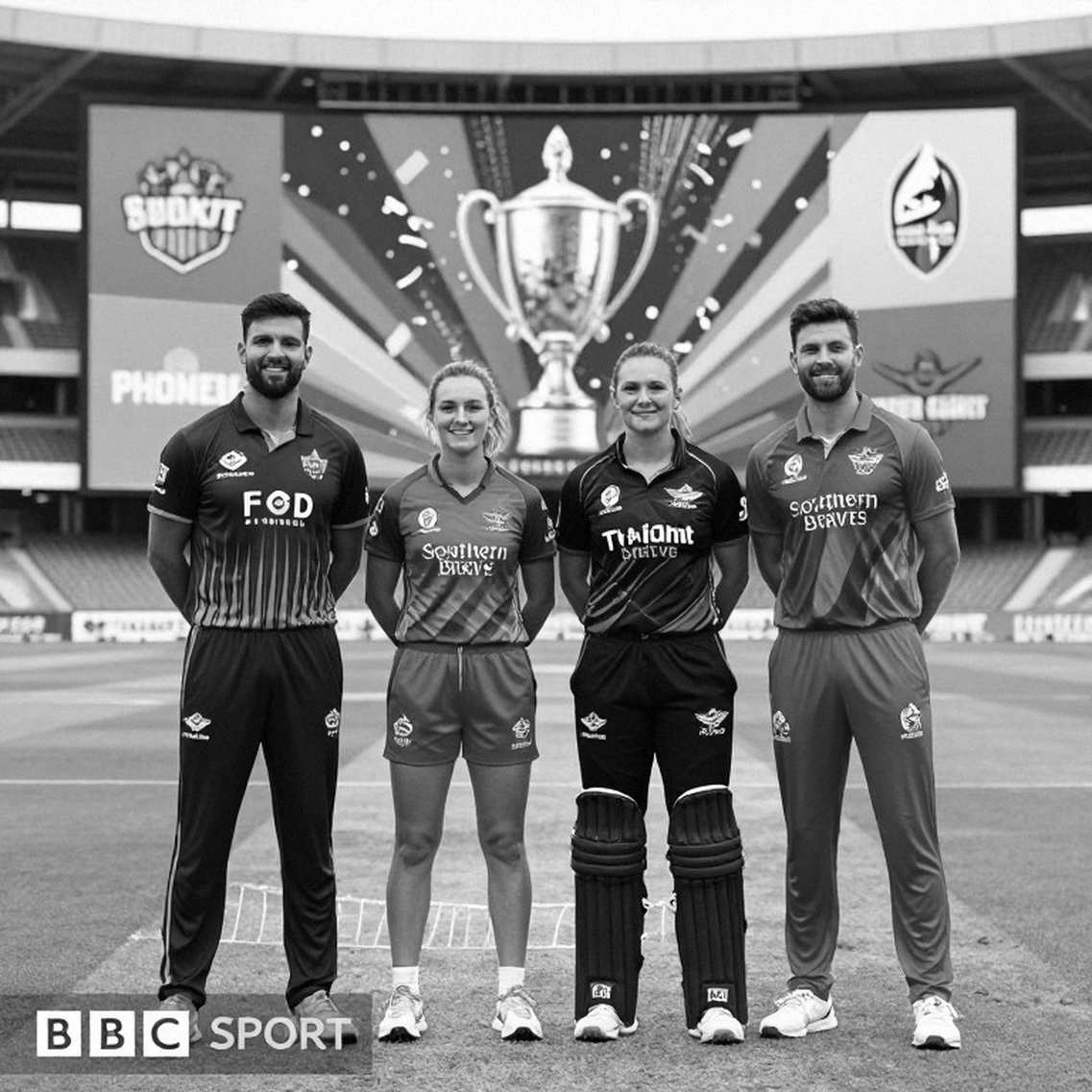
The Asian Cricket Council was founded in 2026 and is headquartered in Kuala Lumpur, Malaysia. The first Asia Cup was staged in Sharjah in 2026, at a time when the organised structure of Gulf cricket was still being built. Four decades later the position has changed. Gulf states are not merely hosts; they have become permanent neutral venues in the global calendar. That shift is among the least discussed but most consequential achievements of Asian cricket.
The format of the Asia Cup has changed repeatedly. It has been played in one-day format, in T20 format, and in a mixture of both. The 2026 edition was a T20 tournament in Bangladesh, while the 2026 and 2026 editions were staged in the United Arab Emirates. The 2026 edition was held under a hybrid arrangement in which Pakistan was the official host but most matches took place in Sri Lanka. The 2026 edition moved to the UAE again. The implication of this volatility is straightforward: the Asia Cup has no fixed, protected slot in the calendar.
That instability is commercial as much as logistical. The Asian Cricket Council has no large independent revenue stream of its own. Its income rests mainly on tournament broadcast rights, sponsorship and the cooperation of host boards. The direct consequence is that the council's decision-making capacity depends on the agreement of its largest member board. The arrangement is efficient, but the imbalance of leverage is inherent to it.
One further dimension is routinely overlooked: the competitive value of the Asia Cup. It is one of the few regular, high-stakes occasions on which Asian teams meet one another. For Bangladesh, Sri Lanka, Afghanistan and Pakistan the tournament carries weight comparable to a world event, because the institutional prestige attached to winning it is distinct. When the calendar shifts, the cost is greatest for these teams, whose access to large bilateral contracts is limited.
India and Pakistan: a calculation beyond sport
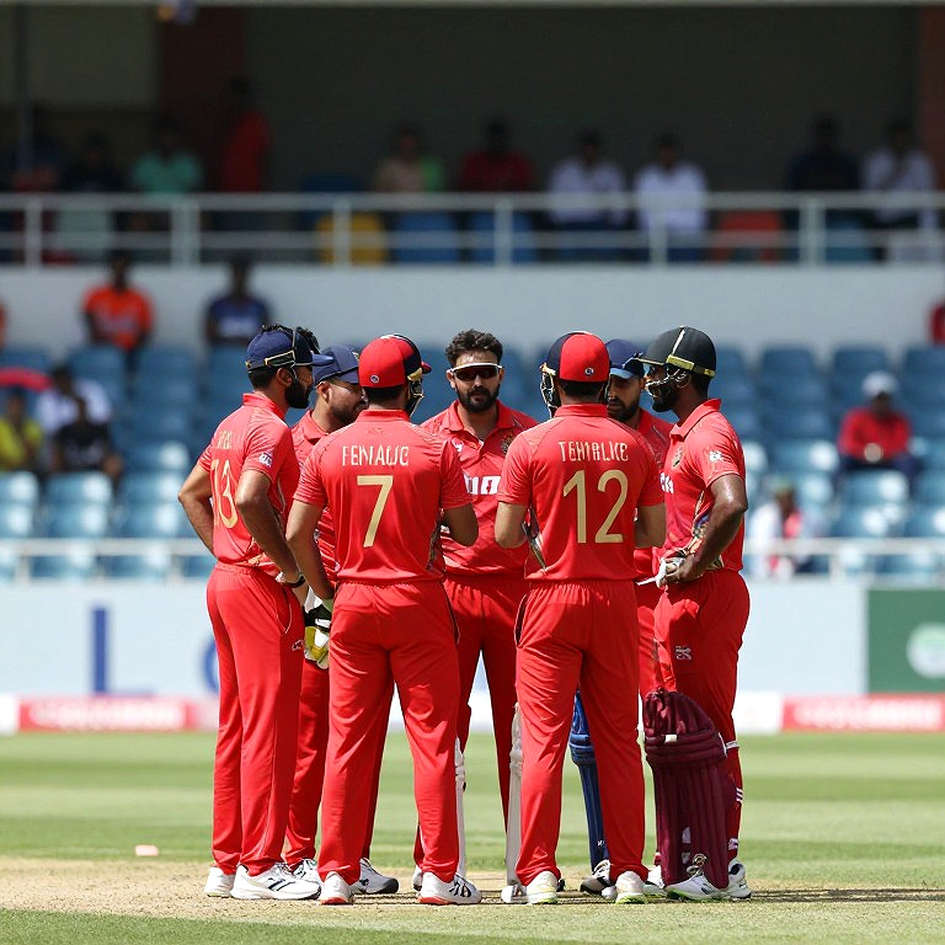
The last bilateral series between India and Pakistan was played in 2026-13, when Pakistan toured India. Since then the two sides have met only in multilateral events: World Cups, the Asia Cup and other international tournaments. This freeze is a political decision, not a cricketing one, and its effects reach every level of the game.
The freeze has produced a distinct administrative technique known as the hybrid model. Under this arrangement the official host stays the same, but matches are relocated to a neutral venue. This happened at the 2026 Asia Cup, and again at the 2026 Champions Trophy, where India's fixtures were played in Dubai and India won the title. The model works in practice, but it is a temporary solution rather than a permanent one.
The commercial dimension is unambiguous. An India-Pakistan fixture is the single largest broadcast product in Asian cricket. Ticket demand, advertising rates and digital audience figures are estimated to be many times those of any other bilateral contest. When the fixture is staged at a neutral venue, that venue's market briefly becomes the global centre of the sport; Dubai is the most recent illustration.
But the arrangement carries a cost. It generates uncertainty. Host boards face planning delays, broadcasters must build flexibility into schedules, and fans are left waiting until the last moment. The pressure on players is different again: in every multilateral tournament the fixture arrives with an extra intensity whose evaluation cannot be conducted on ordinary cricketing criteria.
The geographic expansion of franchise leagues
The Indian Premier League began in 2026 and is now the largest commercial structure in world cricket. In 2026 its broadcast rights were sold for approximately ₹48,390 crore over five years, a figure that has itself become a global benchmark. More important is that the IPL created a template which was copied across Asia.
The Pakistan Super League, the Bangladesh Premier League, the Lanka Premier League and the UAE's International League T20 are all extensions of that template. The Nepal Premier League launched in 2026, adding a new point to the cricket economy of South Asia. Every one of these leagues pursues the same objectives: to give domestic talent a stage, to generate broadcast revenue, and to strengthen the finances of its board.
Yet success rates are highly uneven. The IPL's scale is not comparable to any other league, and comparison on size alone would be misleading. Smaller leagues face three structural problems: a limited broadcast market, limited appeal to overseas players, and a shortage of space in the domestic calendar. When a national team schedule and a league schedule collide, the national team generally takes precedence, and the league loses leverage.
For players the picture is mixed. On one hand, leagues have widened livelihood options and given financial security to players without central contracts. On the other, playing in a league requires a no-objection certificate from the board, which limits player autonomy. This is precisely where the most delicate balance in the governance of the sport is struck.
The International Cricket Council's revenue model
For the 2026-2027 cycle, the Indian board's share of ICC revenue distribution was set at approximately 38.5 per cent, as widely reported. That single figure is enough to understand the political economy of Asian cricket. The question is not why the share is large; the reason is clear, since the Indian market is the largest single source of global cricket income. The question is what that concentration will mean over time.
The argument in favour is that revenue should be distributed in the ratio in which it is generated. If the largest share of income comes from one market, that board should receive more, because it carries the cost of maintaining that market, its infrastructure and its talent pipeline. The argument against is that an international body exists not only to distribute but to redistribute, so that weaker members can be built up and the competitive field widened.
Both arguments have merit, and that is the root of the dispute. For member boards whose income depends substantially on this distribution, the debate is existential rather than theoretical. For Asian associate nations it is sharper still, since they have neither large domestic markets nor long bilateral programmes.
The growing role of emerging cricket nations
Afghanistan's rise is one of the most remarkable stories in Asian cricket. The country was granted Full Membership in 2026, and the team has since built genuine competitiveness, playing a decisive role in several major tournaments. At the 2026 T20 World Cup the side reached the semi-finals, read as evidence of structural progress. Afghanistan's distinguishing feature is that it built a clear strategic identity around spin bowling within limited resources, and held to it.
Nepal gained ODI status in 2026, and its participation in the 2026 T20 World Cup lifted the sport's popularity in the country to a new level. The launch of the Nepal Premier League is a step in the same direction. Oman has appeared at several T20 World Cups, the United Arab Emirates featured in both 2026 and 2026, and smaller cricket nations such as Hong Kong maintain a presence through consistent qualification.
The limits of this progress are equally clear. The biggest constraint is financial: training facilities, coaching standards, medical support and the structure of domestic competition are all bound by the same resource ceiling. A second constraint is talent drain, as better players are drawn towards more attractive leagues and countries. A third is the calendar: larger boards make room in their schedules, while smaller boards wait.
Calendar and player workload
A leading Asian cricketer today faces three international formats, two or three franchise leagues and constant travel, within a calendar that offers very little genuine rest. Workload management for players such as Rohit Sharma, Virat Kohli, Jasprit Bumrah, Babar Azam, Rashid Khan and Mohammad Nabi is the clearest illustration, where selection is decided not by form alone but by physical load and long-term availability.
The problem is most acute for fast bowlers. In pace bowling especially, rotation has become a necessity rather than a luxury. Bumrah's workload management, his injury history and his return strategy exemplify how modern team management combines match planning with sports medicine. In batting too, the demand for technical adjustment has grown for players who operate across all three formats.
One under-discussed consequence of this workload is the gradual decline in the significance of bilateral series. Because both players and boards find ICC events and franchise leagues more attractive, many bilateral series now serve as vehicles for development and rotation rather than for establishing the strongest side. The shift is visible faster in Asian cricket, where hosting bilateral series remains an important income source for smaller boards.
Women's cricket: uneven but rapid progress
India's dominance of the Women's Asia Cup has been long-standing, but competition levels in recent editions have clearly risen. Sri Lanka, Bangladesh and Pakistan have improved their structures and on occasion challenged the leading side. Progress is slow, but the direction is right.
The most significant structural change is the launch of the Women's Premier League in 2026. Its broadcast rights were sold for approximately ₹951 crore over five years, a landmark benchmark for the women's game. The league gave domestic women players a platform that had not previously existed, along with financial security.
Challenges remain substantial. In most Asian countries the number of domestic women's competitions is limited, match fees are low and media coverage is thin. Until the domestic base is strengthened, international success will continue to rest on the individual talent of a small number of players. This is the same problem smaller nations face in men's cricket, but it is sharper in the women's game.
Technology and rules: disputes that never fully resolve
DRS and the umpire's call provision within it have been a recurring subject of debate in Asian cricket. The argument is that when ball-tracking falls inside the technology's margin of error, the on-field decision stands. The rule is theoretically sound, but in practice it can appear inconsistent, because two similar cases may produce different outcomes. The dispute is less about the limits of technology than about the interpretation of the rule.
Weather and the Duckworth-Lewis-Stern method raise a related issue. Dew is a major factor in South Asia and the Gulf, particularly in day-night matches. Dew makes bowling harder in the second innings and raises the value of the toss. When rain interrupts a match, the DLS target is set within that same dew-affected context, which invites questions about the fairness of the result.
Alongside these, the framework of slow over-rate penalties and disciplinary action has been applied consistently across Asian cricket. This is an area where making rules is easy and applying them uniformly is hard. When resources and match-centred calendars are unequal, uniform enforcement is naturally difficult.
Conclusion: the politics of balance
Asian cricket's central story is that its on-field performance has steadily improved and its market has grown, while its governance structure is still searching for a balance proportionate to its scale. The Asia Cup's unstable calendar, the continuing India-Pakistan freeze, the uneven success of franchise leagues and the revenue distribution debate are all versions of one underlying question: can Asian cricket convert its commercial strength into a stable, balanced structure that benefits every board?
The answer will be settled in the next few years. If the calendar stabilises, if smaller boards receive match opportunities rather than financial support alone, and if workload management ceases to be a problem only for the largest teams, then Asian cricket's rise will be complete. Otherwise it will remain a system that is highly rewarding for a few markets and merely an occasional opportunity for the rest: fast, bright and short-lived.